

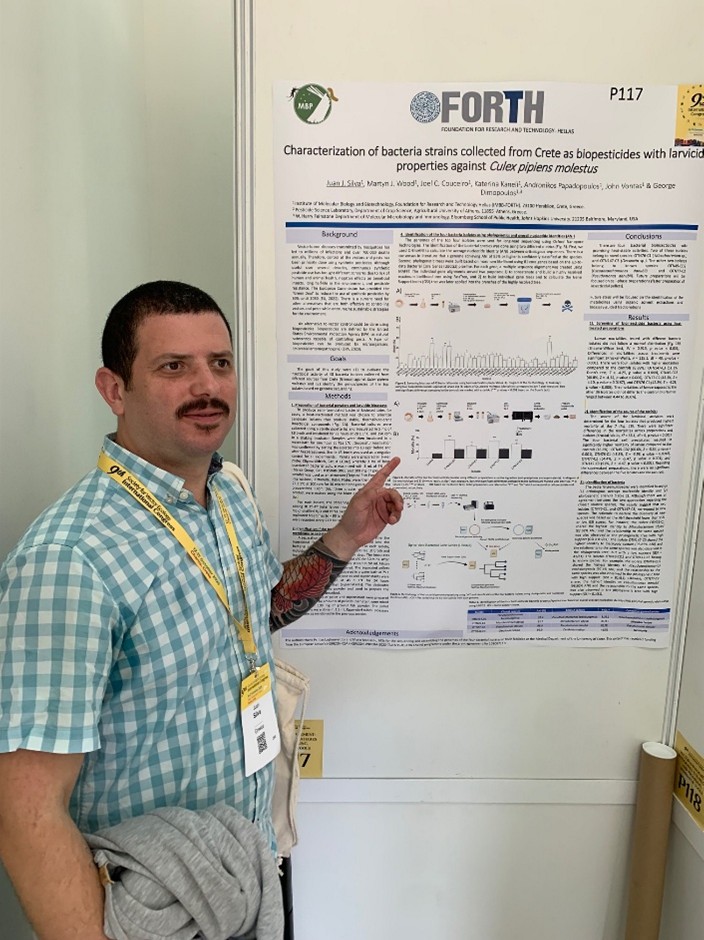
The poster presented by the post-doctoral researcher Juan Silva (Characterization of four bacteria strains collected from Crete as inactivated biopesticides with larvicide and adulticide properties against Aedes albopictus and Culex pipiens molestus) reported on the screening and characterization of bacterial isolates for mosquito control. Forty isolates obtained from diverse habitats in Crete were initially evaluated against larvae of Culex pipiens molestus using heat-inactivated preparations to identify strains producing heat-stable insecticidal compounds. The top four isolates with the highest activity were selected for further characterization. A second assay to identify the source of the toxins revealed that insecticidal activity was associated with cell components rather than secreted metabolites in the culture medium. Genomic sequencing and analysis identified two isolates as belonging to known species, and two isolates assigned to novel species of the genera Microbacterium and Oerskovia.
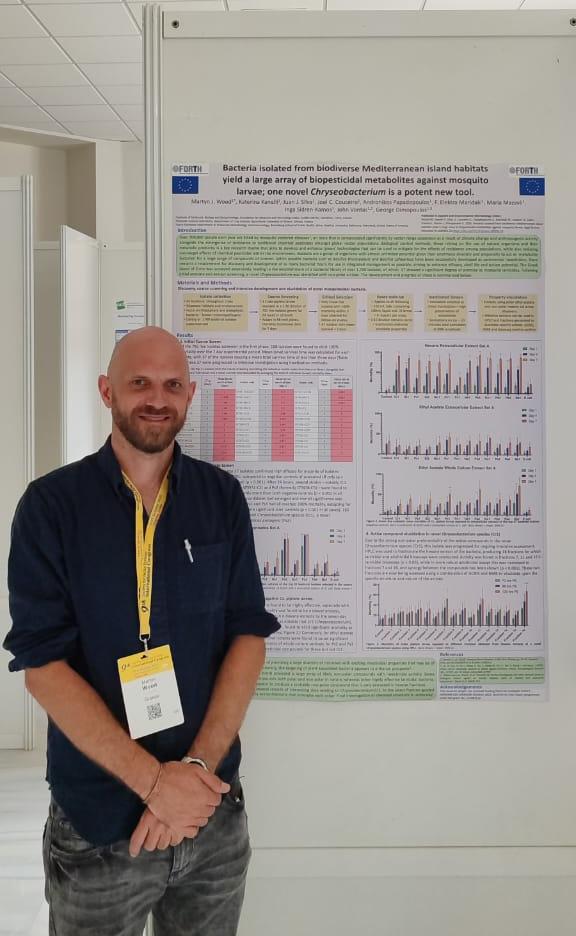
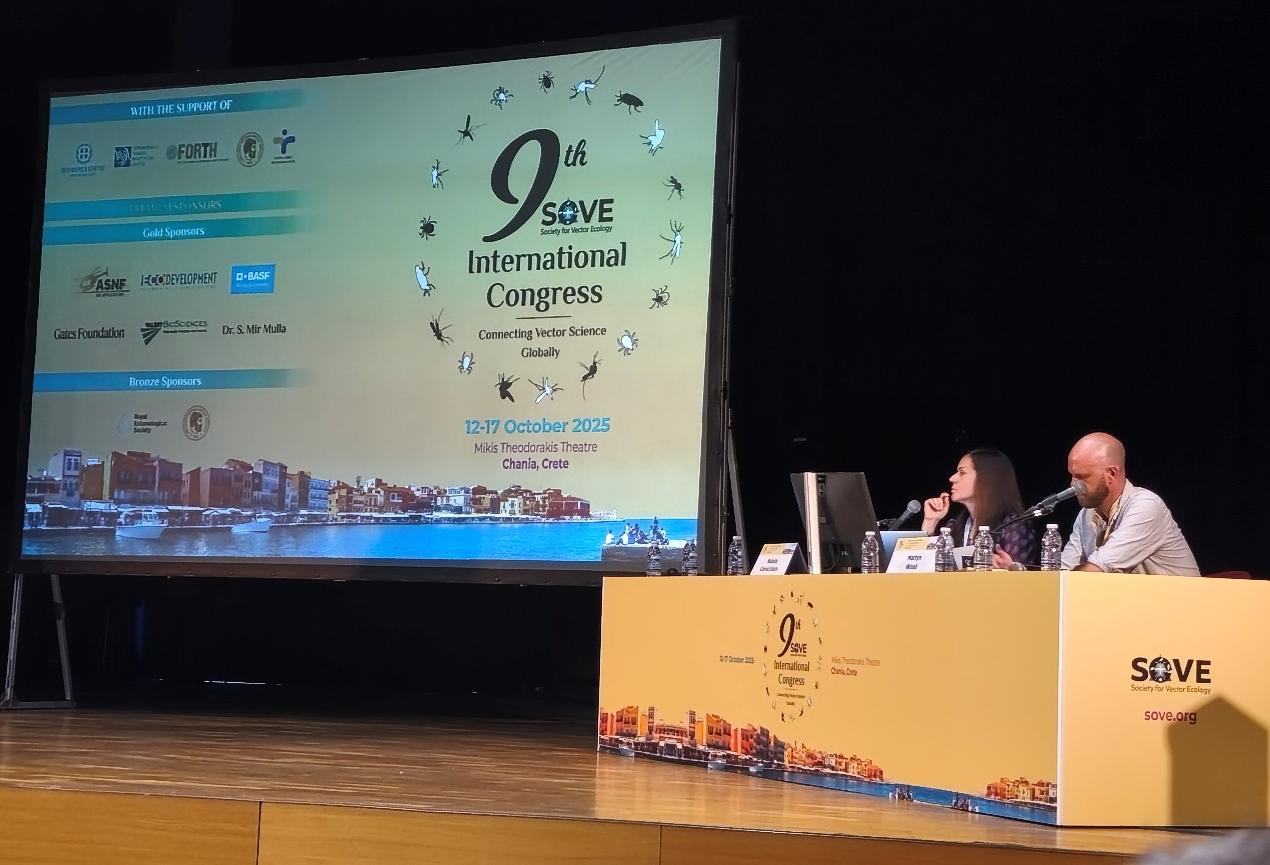
The poster (Bacteria isolated from biodiverse Mediterranean island habitats yield a large array of biopesticidal metabolites against mosquito larvae; one novel Chryseobacterium is a potent new tool) presented by Dr. Martyn J. Wood at SOVE 25 focused on the discovery and development of novel mosquitocidal bacteria isolated from biodiverse Mediterranean habitats. From a library of over 1,700 environmental isolates, 792 were screened, with 108 causing 100% larval mortality within seven days and 37 achieving this within three days. Subsequent bioassays using sonicated and solvent-extracted preparations identified several highly active strains, including a novel Chryseobacterium (Cr1) and Pseudomonas spp., which maintained strong efficacy across assays. Extraction and fractionation approaches demonstrated clear differences in the localisation and polarity of active compounds, with Cr1 producing predominantly non-polar metabolites and evidence of synergistic activity between specific fractions. Ongoing analytical work is targeting structural elucidation of these compounds which have been narrowed to a small selection of fatty acids and terpene like compounds. Additionally, Dr. Wood was invited to act as a session co-chair for the second student presentations session, further enhancing the visibility of the MicroBioPest group members and their ongoing works to the vector ecology research community.
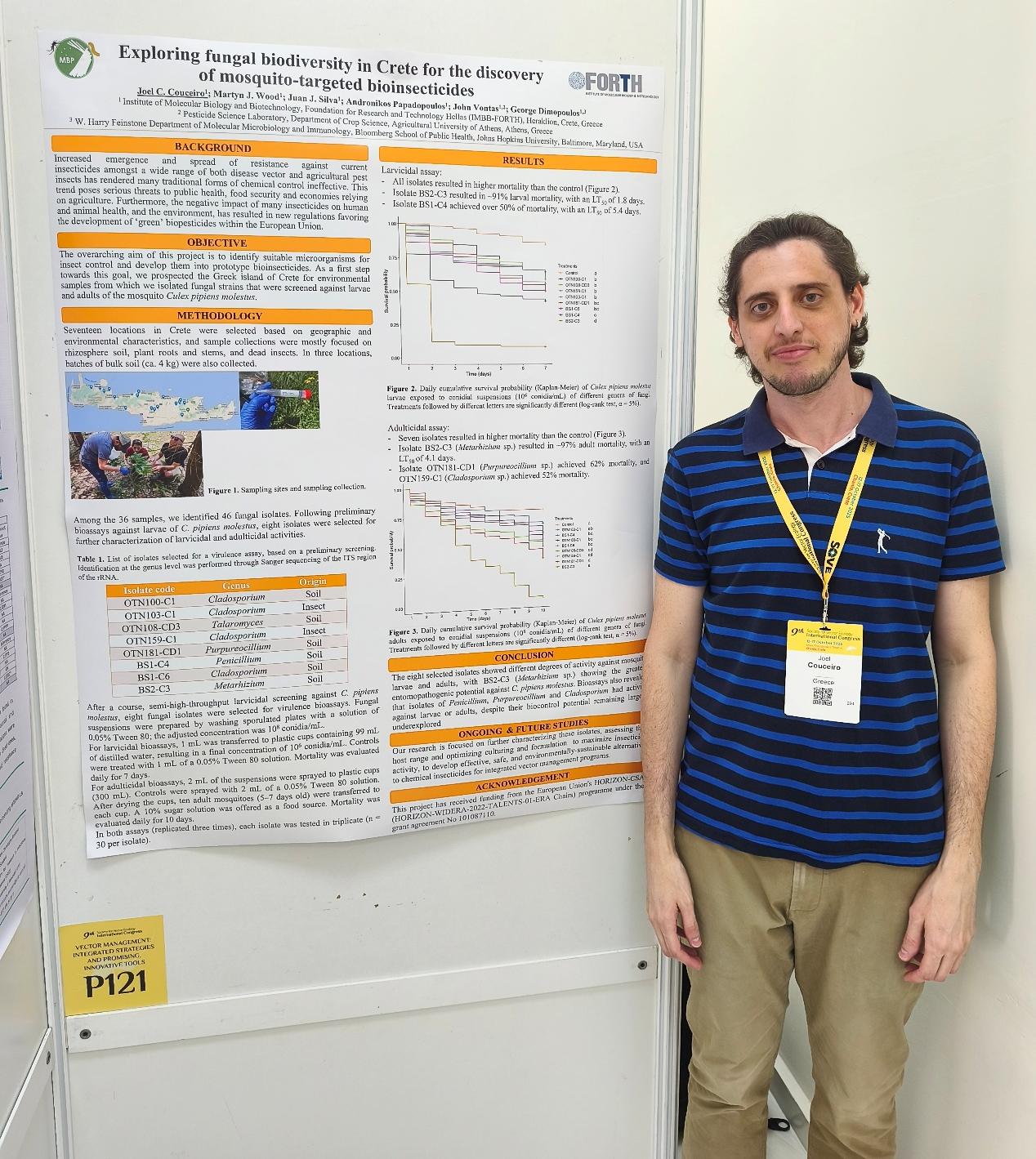
The poster (Exploring fungal biodiversity in Crete for the discovery of mosquito-targeted biopesticides) presented by the post-doctoral researcher Joel da Cruz Couceiro reported on the sampling of natural habitats in Crete to obtain fungal isolates that could present potential for mosquito control. Bioassays against larvae of Culex pipiens molestus resulted in 8 candidates, that then were assessed for adulticidal activity against this mosquito species, revealing isolates of Metarhizium, Cladosporium and Purpureocillium with activity against both mosquito life-stages.
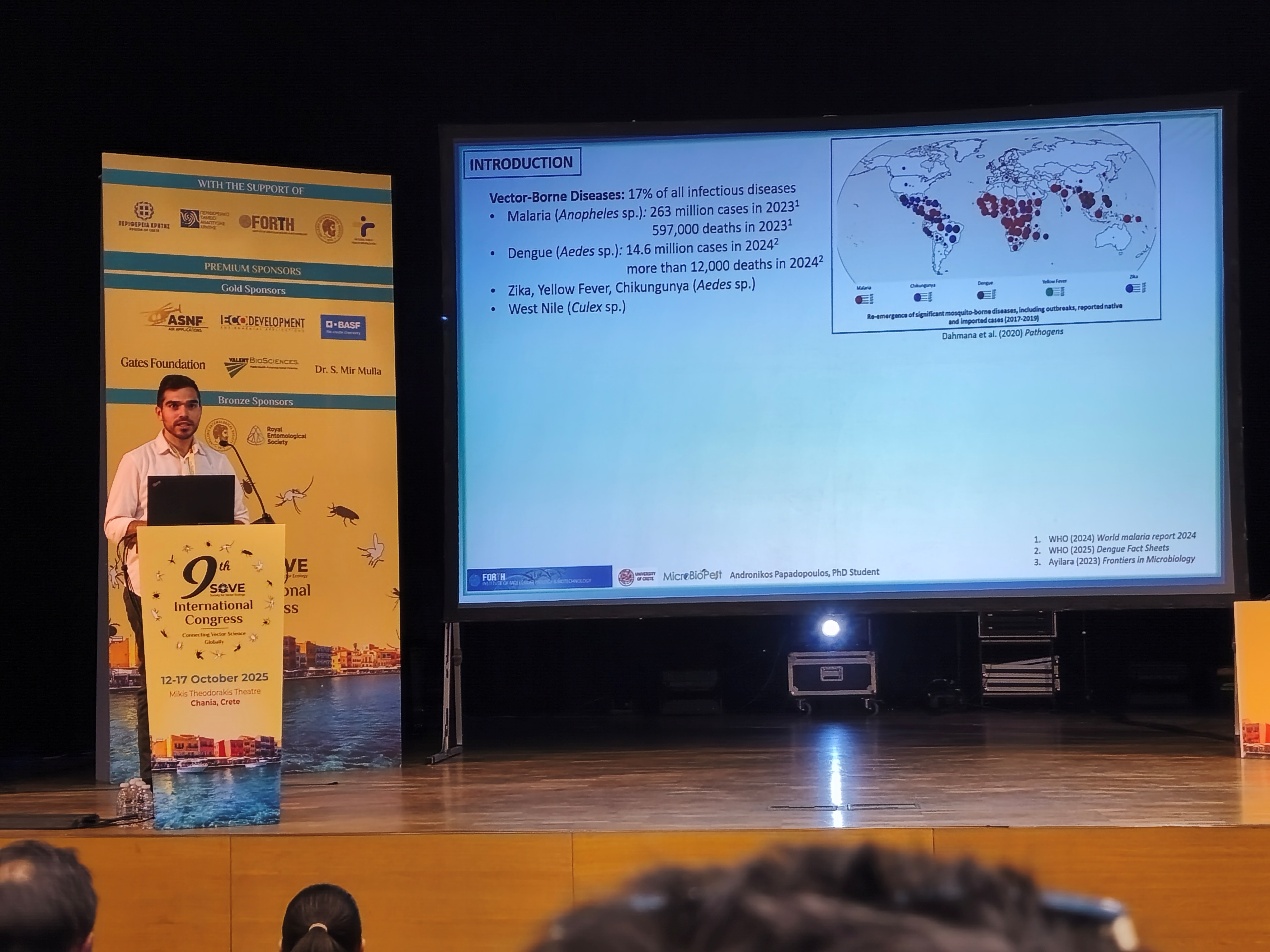
The oral presentation (Discovery of novel bacteria that produce heat-stable metabolites with insecticidal activity against Culex pipiens molestus) given by the PhD student Andronikos Papadopoulos reported on his work with bacterial metabolites exhibiting insecticidal activity. After a preliminary screening with 501 isolates, and a secondary screening with 35 isolates, five isolates were selected for further characterization. Larvicidal and adulticidal assays resulted in high mortality, and sublethal effects in the population. Genome sequencing revealed that three isolates also belong to new species, and a Pfam protein analysis indicated two isolates producing chitinases, which could be responsible for the insecticidal activity.
The abstracts and the program overview can be downloaded here.