
- You are here:
-
Home

- News
In the fourth episode of the MicroBioPest Podcast, Ms. Georgina Pantidi (PhD candidate, University of Crete) and Dr. Martyn Wood (Postdoctoral Research Associate, IMBB-FORTH) explore three other groups of biological control agents: baculoviruses, entomopathogenic nematodes, and parasitoid wasps.
The discussion covers topics such as:
- How baculoviruses infect susceptible insects after being ingested and use the host’s cells to reproduce
- How entomopathogenic nematodes work together with symbiotic bacteria to kill their hosts
- How parasitoid wasps locate suitable hosts and use them for the development of their offspring
- Why timing, host specificity, behaviour, and environmental conditions are so important for successful biological control
The episode also looks at practical examples, including the use of baculoviruses against caterpillar pests, nematodes against soil-dwelling insects, and parasitoids such as Trichogramma and Encarsia formosa in crop protection.
View on our YouTube Channel or listen to it on Spotify.
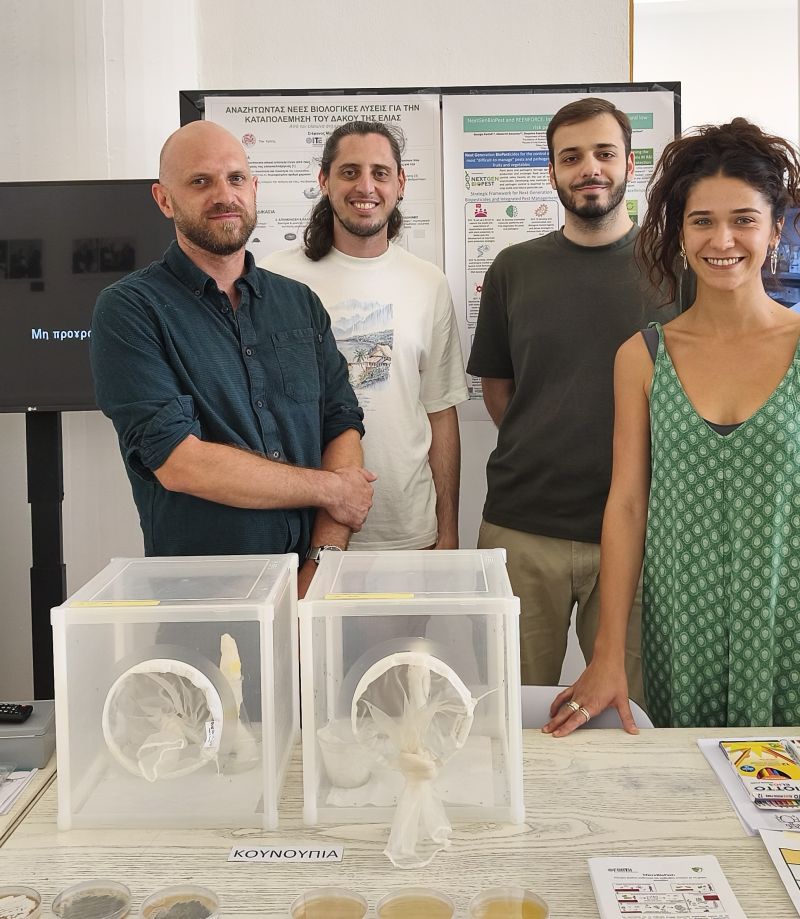
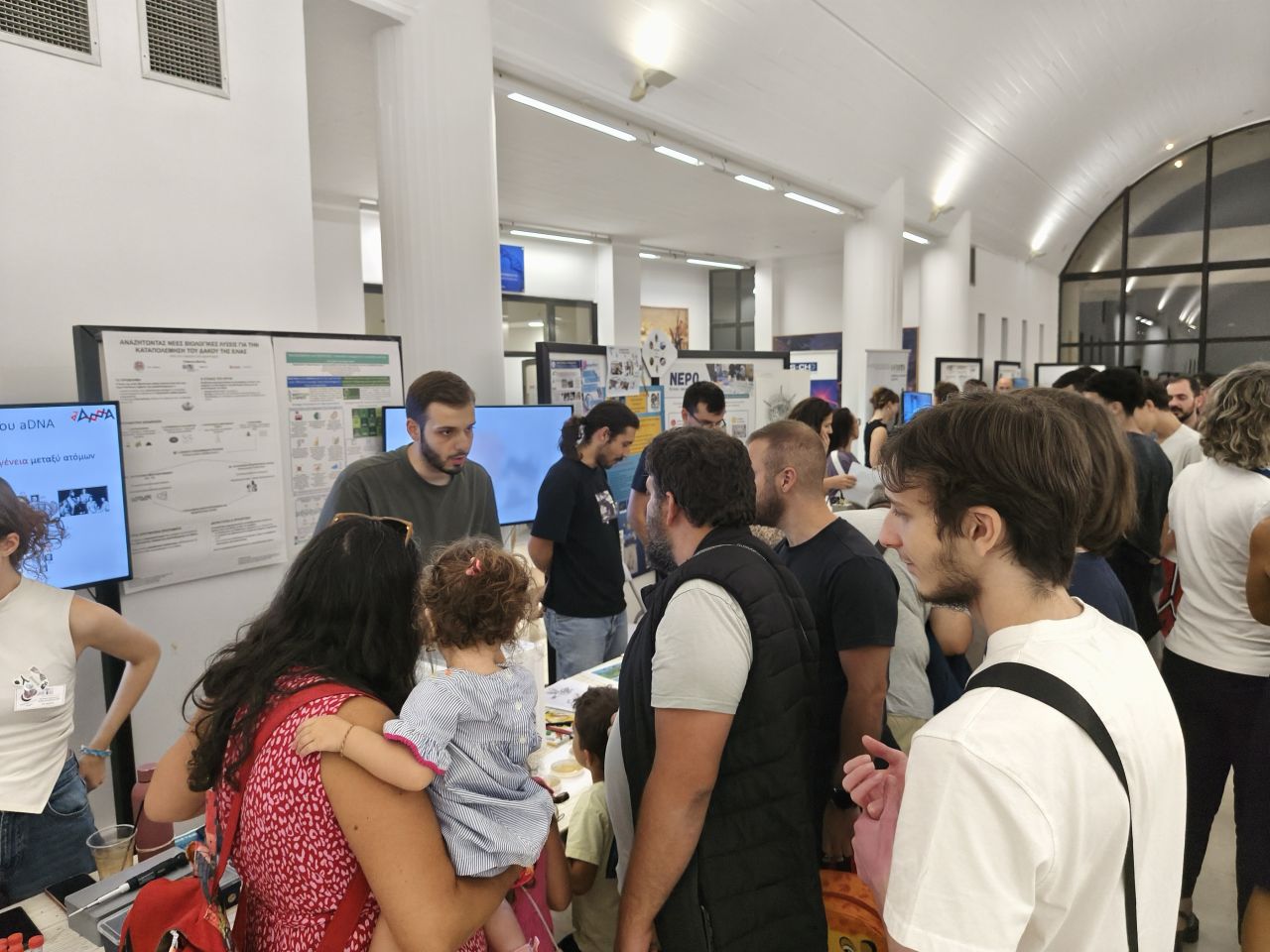
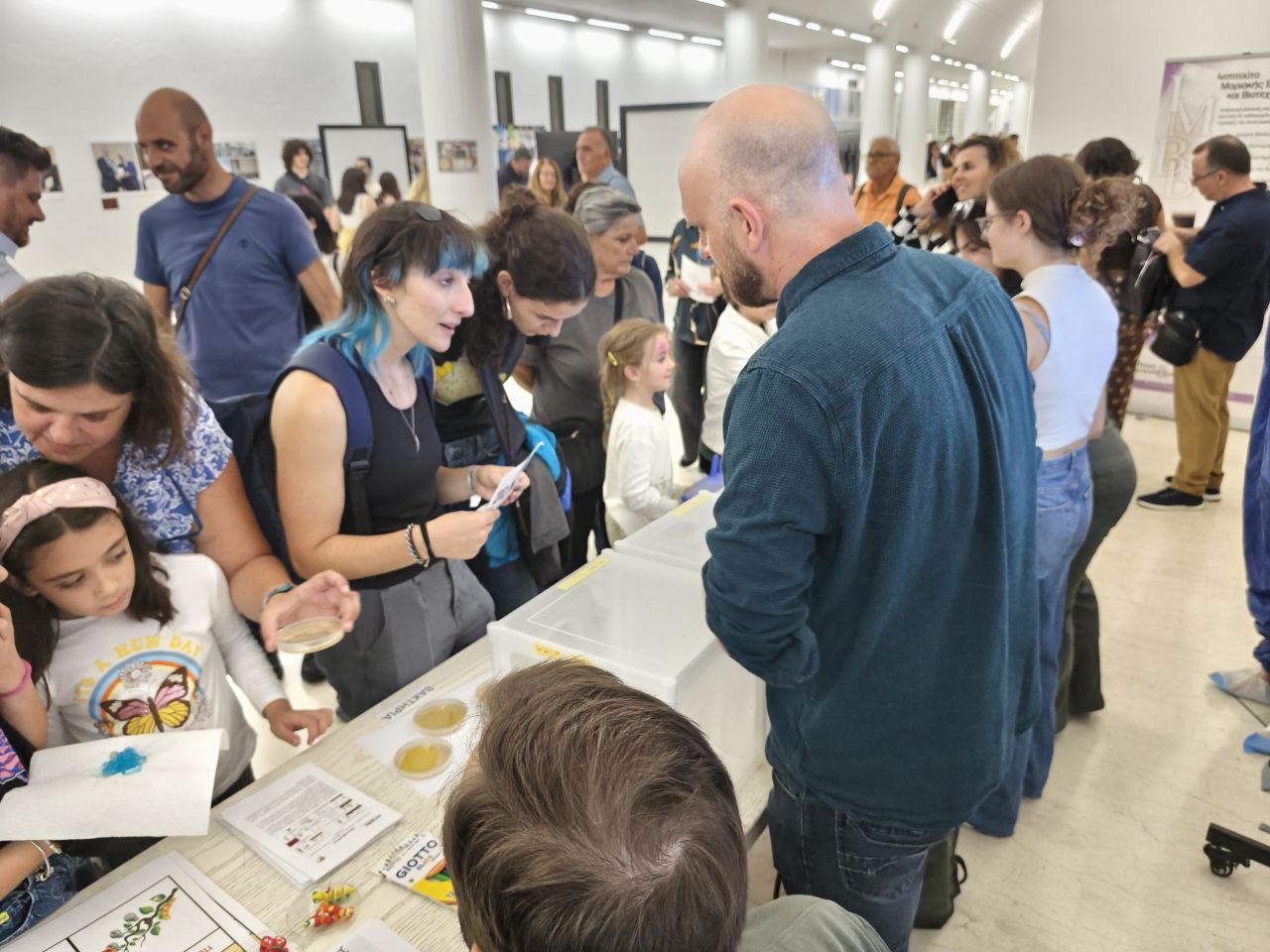
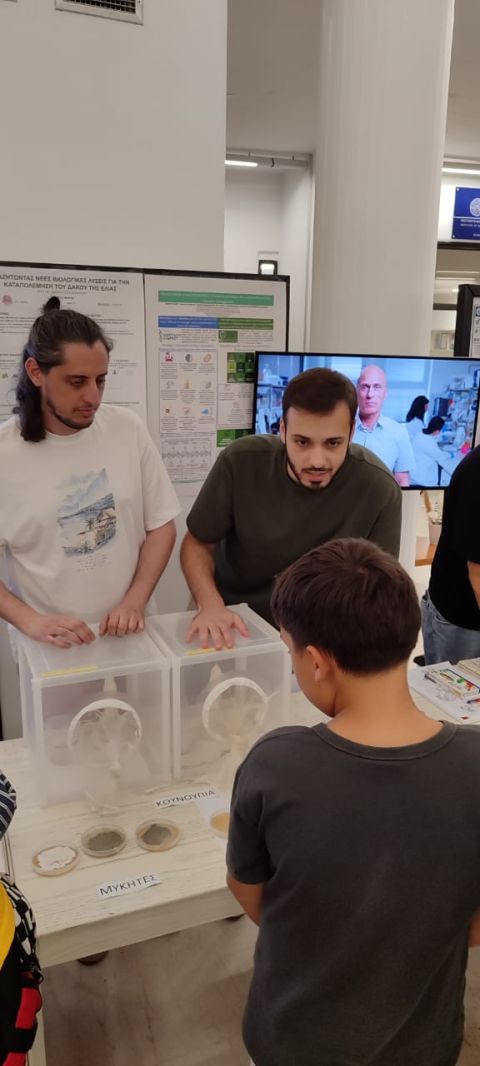
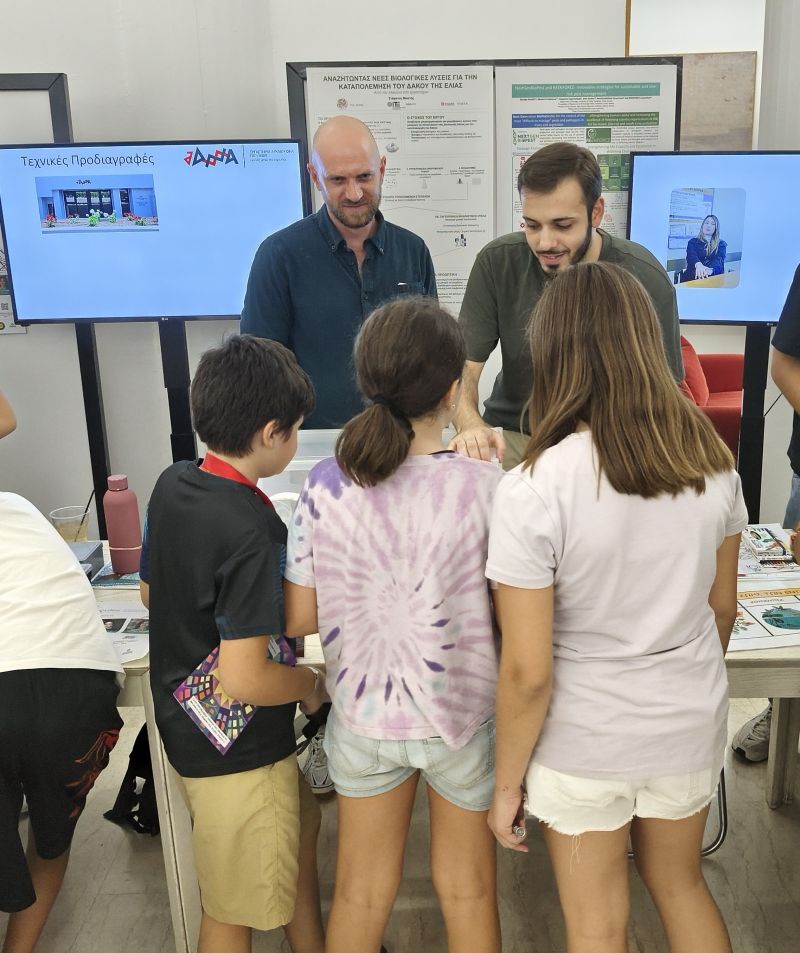
On the 25 September 2026, the MicroBioPest team participated in the European Researchers’ Night 2026, a European initiative to promote the value of research and science. Our group prepared a stand containing a mosquito cage, to demonstrate part of their life-cycle and rearing; Petri dishes containing bacterial and fungal isolates; flyers and a poster with an explanation of the project; and a TV exhibiting the video produced about the project. We would like to thank everyone that came and visited our stand!
The MicroBioPest Newsletter presents recent project activities advancing microbial biopesticides for sustainable pest and vector control. It highlights participation in international scientific conferences, new research publications on promising bacterial and fungal biocontrol agents and outreach initiatives including a citizen science campaign and the launch of the “Listen to Microbes” podcast series.
In this episode, Dr. Joel Couceiro and Dr. Martyn Wood (both Postdoctoral Research Associates, IMBB-FORTH) discuss how bacteria became important tools for controlling agricultural pests and disease vectors. They talk about the history of Bacillus thuringiensis, from its discovery in diseased insects to its use for pest control and genetically modified crops. They explain how its insecticidal proteins act in the insect gut, why different Bt strains target different groups of insects, and why many insects and non-targets are not susceptible to Bt. The discussion also covers other insecticidal bacteria and the challenges of formulation and resistance management.
View on our YouTube Channel or listen to it on Spotify.
In this episode, Mr. Panagiotis Michailidis (Research Assistant, IMBB-FORTH) and Dr. Joel Couceiro (Postdoctoral Researcher, IMBB-FORTH) discuss how entomopathogenic fungi became important tools for biological control, tracing their history from Agostino Bassi’s studies to the first attempts to use fungi for insect control.
The discussion covers how fungal spores infect insects, host range, the influence of environmental conditions on their effectiveness, the importance of formulation, entomopathogenic fungi acting as endophytes, and the role of these microorganisms as part of integrated pest management.
View on our YouTube Channel or listen to it on Spotify.
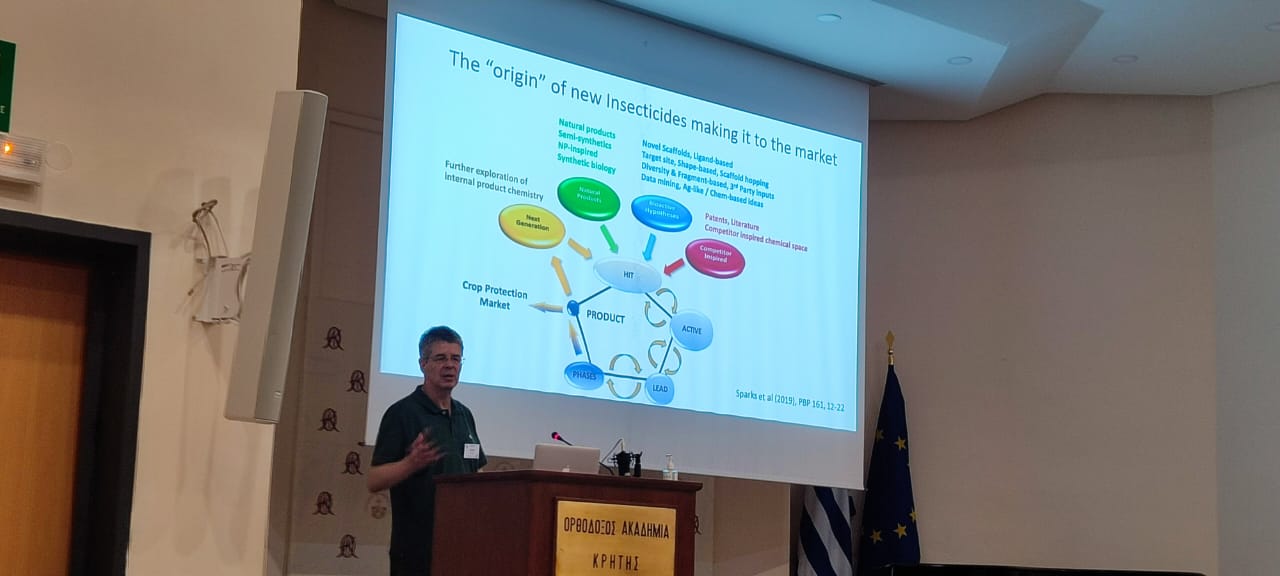
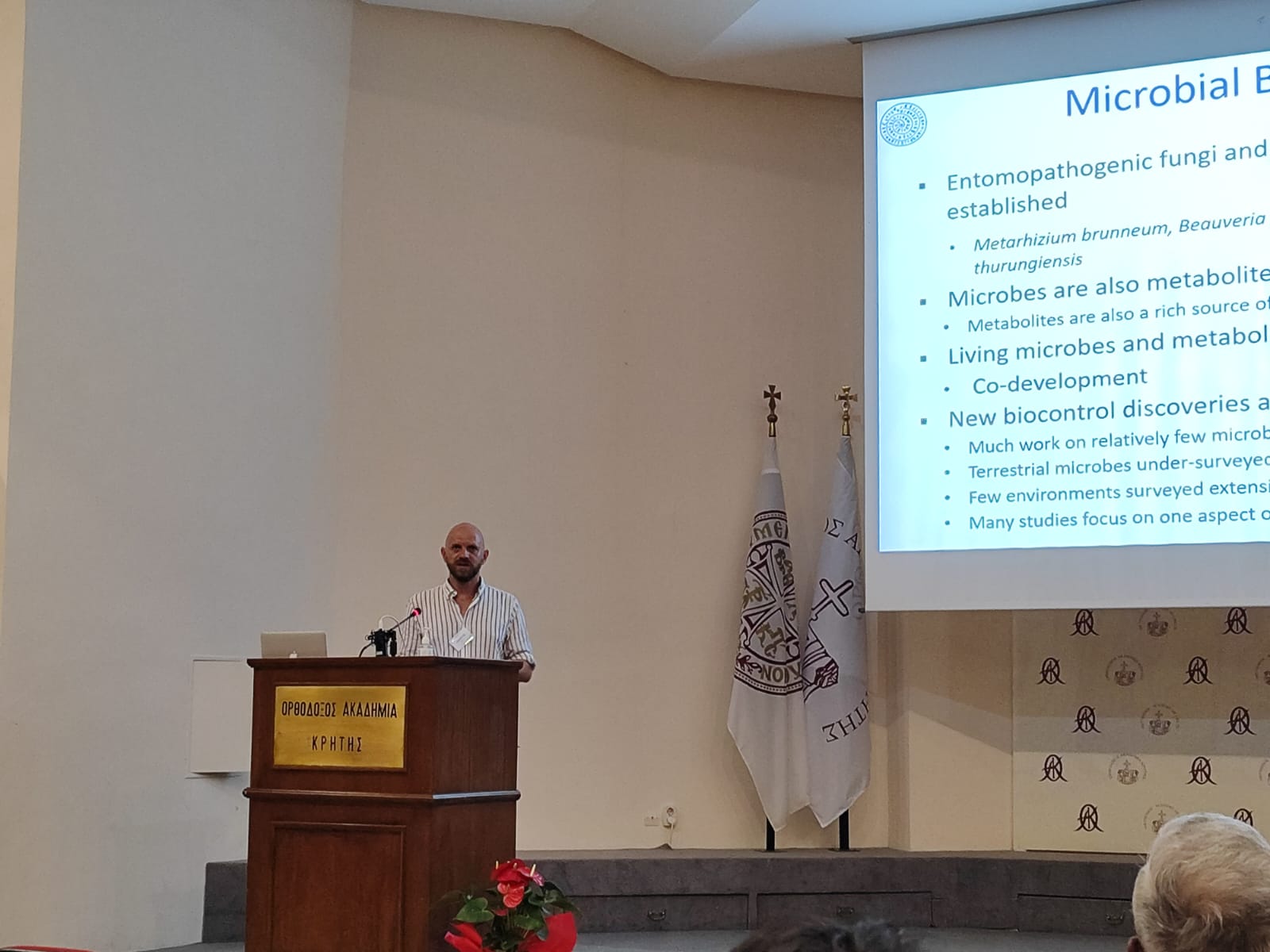
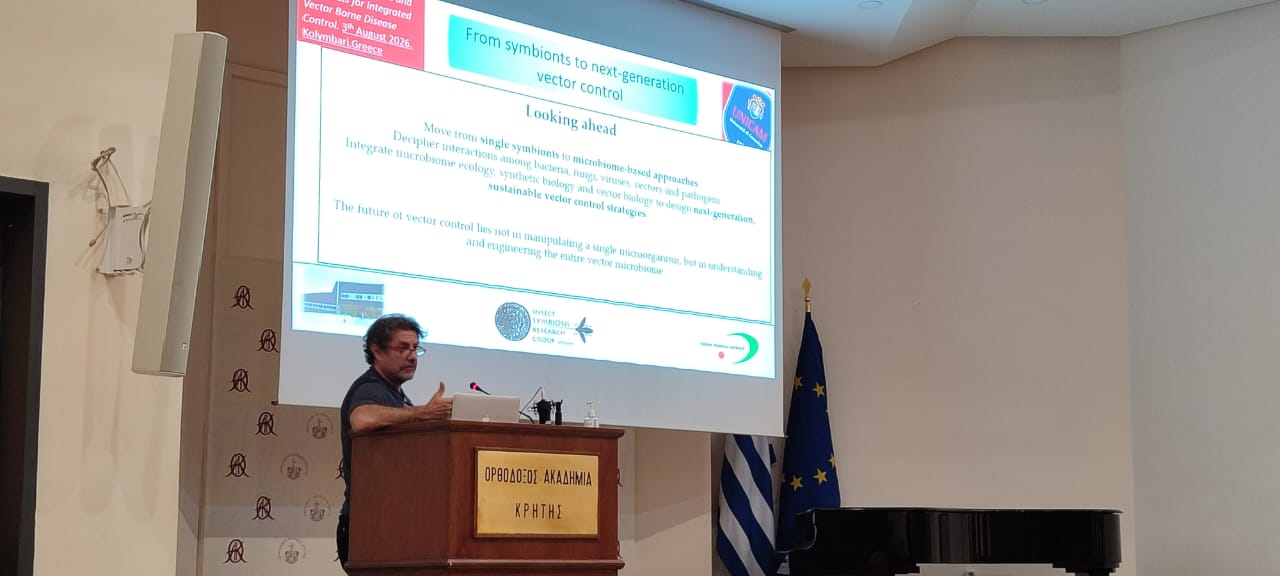
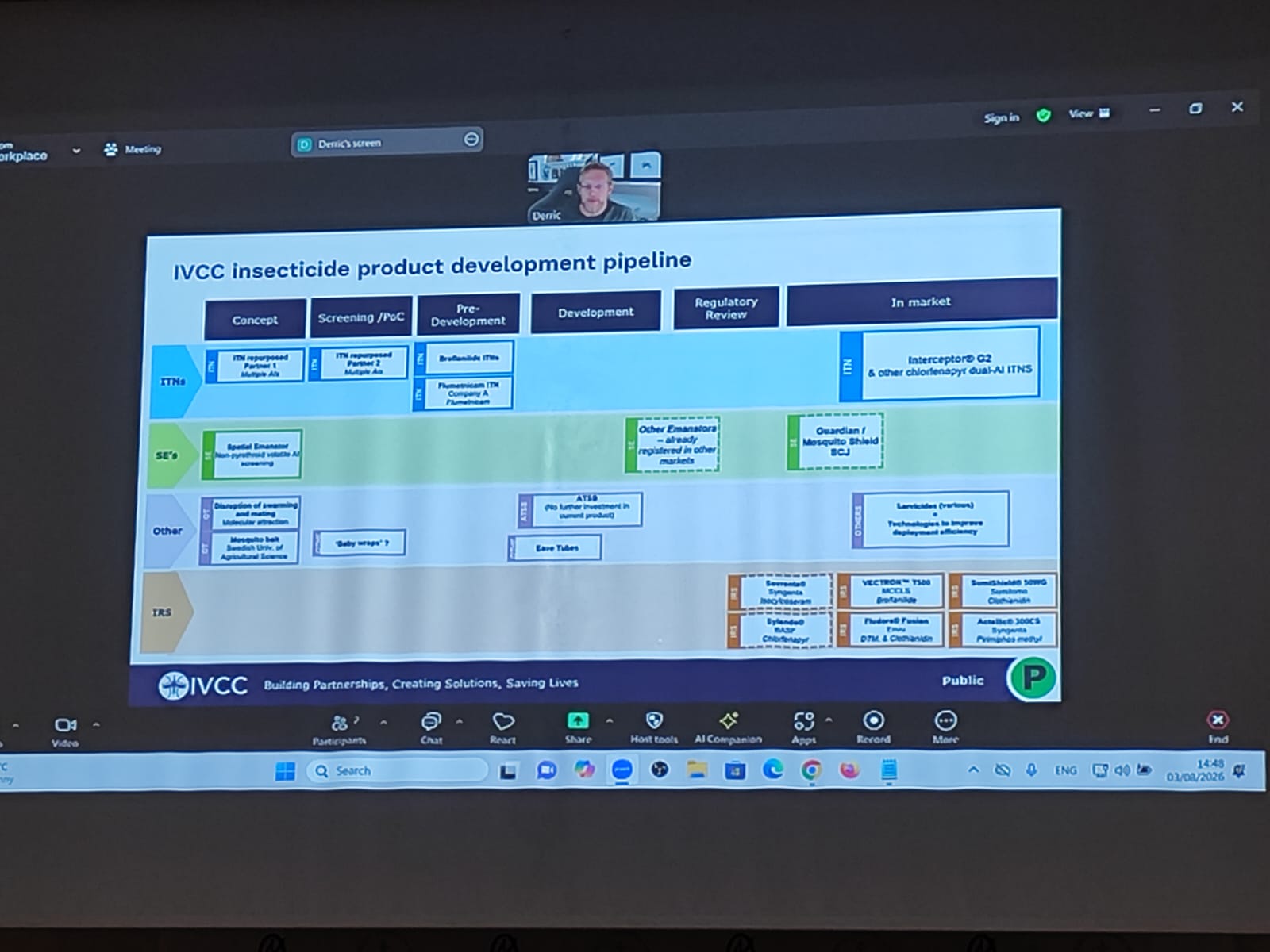
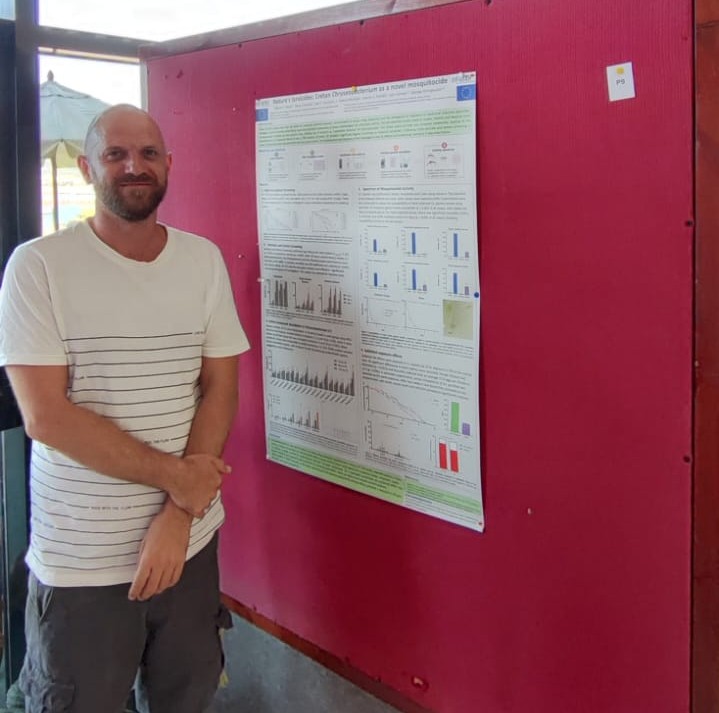
Last week, our team participated in the 2026 Mosquito Kolymbari Meeting. During the meeting, we organized the symposium “Advancing Microbes and Chemicals for Integrated Vector Borne Disease Control”, which brought together experts working on complementary approaches to vector control.
During the conference, Dr. Martyn Wood also presented his recent progress with a poster titled “Nature’s larvicides: Cretan Chryseobacterium as a novel mosquitocide”. Here are some photos from the symposium and poster presentation, featuring Prof. John Vontas and Dr. Wood, members of the MicroBioPest project, as well as Prof. Guido Favia and Dr. Derric Nimmo.
Thank you to everyone who joined our symposium and engaged in the discussions.
In this episode, Dr. George Dimopoulos (Professor, Johns Hopkins Bloomberg School of Public Health; ERA Chair of MicroBioPest) and Dr. John Vontas (Director, IMBB-FORTH; Professor, Agricultural University of Athens) discuss the drawbacks of relying mainly on chemical insecticides for pest and vector control, including insecticide resistance, harm to non-target species, and rising costs.
They explain how resistance develops, why pest control involves a wider ecological system rather than a single target species, and how biological control and biopesticides work as alternatives. They note that a natural origin does not guarantee safety, and that agents with delayed action can still be effective against disease transmission. The episode ends with a discussion of Integrated Pest and Vector Management (IPM/IVM) as an approach based on combining multiple control methods.
View on our YouTube Channel or listen to it on Spotify.
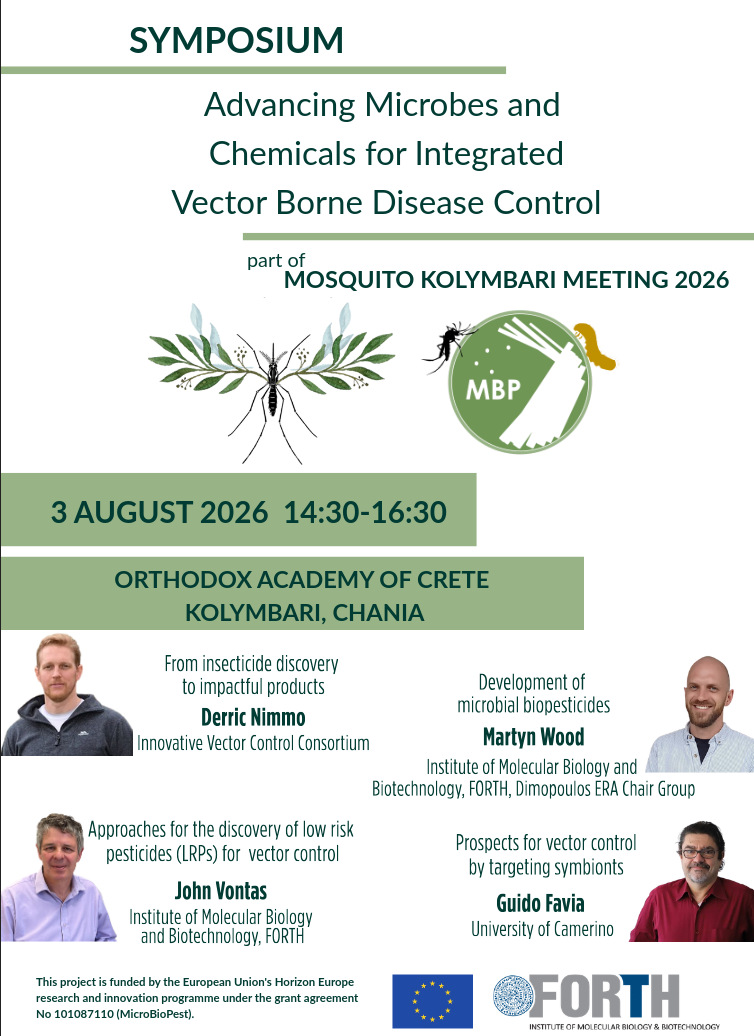
The MicroBioPest project will organise the symposium “Advancing Microbes and Chemicals for Integrated Vector-Borne Disease Control” as part of the Mosquito Kolymbari Meeting 2026. The symposium will take place on 3 August 2026, from 14:30 to 16:30, at the Orthodox Academy of Crete, and will bring together experts presenting innovative chemical and microbial approaches for sustainable vector control.
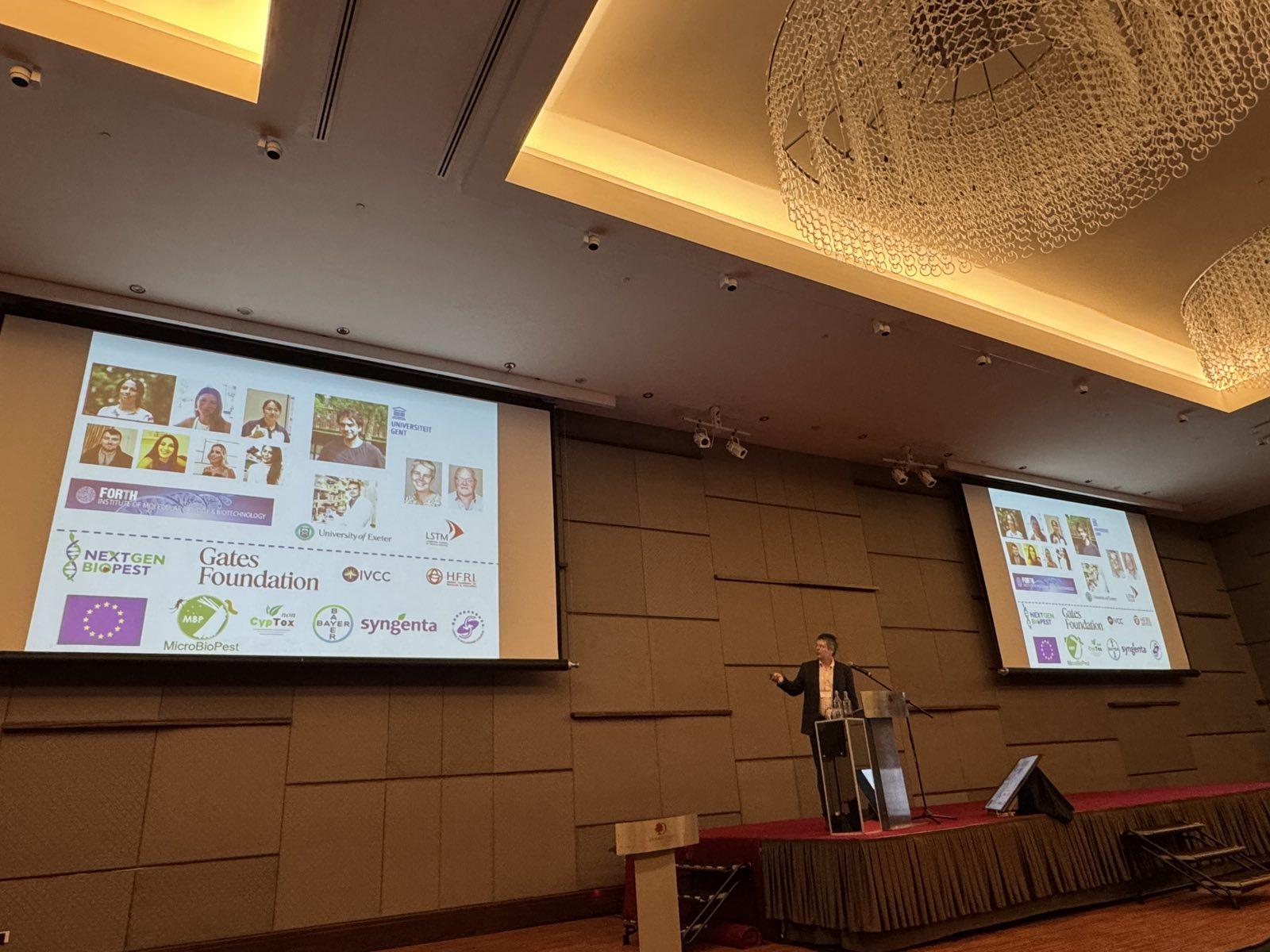
Prof. Vontas, was one of the plenary speakers at the 9th Molecular Insect Science Conference, held in Kuala Lumpur, Malaysia, from 27-29 April 2026. During the session “Molecular Insights into Insecticide Resistance and Sustainable Management”, he delivered a presentation entitled “Functional Approaches for Elucidating Insecticide Resistance Mechanisms”, highlighting recent advances in understanding the molecular mechanisms underlying insecticide resistance and their relevance to the objectives of the MicroBioPest project.
Link to program overview here.
We are pleased to announce the publication of our latest research article, “Screening of environmental fungi from Crete reveals candidates for biological control of mosquitoes”, in the Journal of Medical Entomology.
In this study, we isolated and screened environmental fungi collected from diverse habitats across Crete, Greece, to identify candidates with potential for mosquito control. From 46 fungal isolates representing 13 genera, we identified a Metarhizium sp. strain that showed strong larvicidal and adulticidal activity, achieving over 90% mortality in laboratory assays. The study also identified promising activity in isolates belonging to other fungal genera, including Cladosporium, Penicillium, and Purpureocillium, highlighting the untapped potential of environmental fungal diversity for sustainable vector management.
Read the full article here: https://doi.org/10.1093/jme/tjag069
The microBioPest Newsletter presents the latest progress of the project in developing microbial biopesticides as sustainable alternatives to chemical pest control. It highlights key scientific results, participation on international conferences, expanding collaborations, and outreach activities engaging both the research community and the public.
Read the Newsletter here.
The ERA chair of MicroBioPest, Prof. Dimopoulos, was one of the plenary invited speakers of the congress and gave a talk entitled "Mitigating insecticide resistance with novel microbial biopesticides», presenting the Microbiopest project, overview, and results.
Link to abstracts and programme overview here.
The 9th International Congress of the Society for Vector Ecology (SOVE 25), was the annual installment of the SOVE conference, that year held in Chania. The conference brought together a global community of researchers, public health professionals, and vector control specialists to address current understanding and developments in vector biology, ecology and disease management. Centred around the theme “Connecting Vector Science Globally,” the conference featured over 200 presentations spanning topics such as vector ecology, host–pathogen interactions, surveillance, and innovative control strategies. Particular emphasis was placed on interdisciplinary collaboration, One Health approaches, and the impacts of climate change on vector-borne diseases. The meeting provided a platform for integrating research with operational practice, while fostering international collaboration and knowledge exchange across academia, public health, and industry.
The event is a European initiative to promote the value of research and science. The MicroBioPest group set up a stand to present our research to the public. The stand contained a mosquito cage, to demonstrate part of their life-cycle and rearing; Petri dishes containing bacterial and fungal isolates; a microscope with slides of the microorganisms; flyers and a poster with an explanation of the project; and a TV exhibiting the video produced about the project.
Webinar organized in collaboration with NextGenBioPest and SAFWA Prima project which focused on raising awareness of biopesticides, promoting integrated pest management, addressing insecticide resistance, showcasing successful case studies, protecting environmental health, preserving biodiversity, and enhancing long-term farm productivity in line with global agricultural trends.
The agenda for the event can be found here.
The ERA chair of MicroBioPest, Prof. Dimopoulos, gave a talk entitled «Versatile Game-Changing Biopesticides for Mosquito-Borne Disease Interventions», presenting the Microbiopest project, overview, and results.
Link to abstracts here.
The Ento 24 conference was the 2024 installation of an annual conference organized by the Royal Entomological Society of the UK, that year held at the University of Liverpool. This conference brought together a broad community of entomologists to present and discuss recent advances across fundamental and applied insect science. The meeting covered diverse topics including insect ecology and behaviour, vector biology, pest management, and emerging control technologies, with contributions spanning molecular studies through to field-based applications. Particular emphasis was placed on sustainable management strategies, resistance evolution, and the impacts of environmental change on insect populations. The conference provided a platform for knowledge exchange, collaboration, and the integration of multidisciplinary approaches to address current challenges in entomology.
The New IPM Symposium is an annual conference held at Swansea University that brings together over 200 researchers, industry representatives, and policymakers to explore emerging opportunities in Integrated Pest Management. The conference focuses on the development of sustainable, environmentally friendly pest control strategies, with particular emphasis on crop protection and the management of insect vectors affecting human and animal health. Sessions covered a wide range of topics including microbial biopesticides, semiochemicals, vector control, and AI-driven monitoring technologies, while also highlighting the need for interdisciplinary collaboration and translation of research into practical applications. The event provides a platform for innovation, networking, and the advancement of integrated, low-impact pest management approaches in response to global challenges such as climate change and pesticide resistance.
More...
News - Events
- Podcast Episode 4 - How can viruses, nematodes, and parasitoid wasps be used to control insect pests?
- MicroBioPest in the European Researchers’ Night 2026
- MicroBioPest Newsletter - Advancing sustainable control of disease vectors and agricultural pests - August 2026
- Podcast Episode 3 - How Fungi Became Biological Insecticides
- Podcast Episode 2 - How Bacteria Changed Pest Control
|
|
HORIZON-WIDERA-2022-TALENTS-01- ERA Chairs This project has received funding from the European Union's HORIZON-CSA (HORIZON-WIDERA-2022-TALENTS-01- ERA Chairs) programme under the grant agreement No 101087110 |